Most people don’t think about their chimney until they want to use it. And by then, it’s usually mid-November, temperatures have dropped, and the last thing you want to hear is that something’s wrong. The smarter move, and I say this from a practical standpoint, not a lecture one, is to catch the warning signs early, before the season sneaks up on you.
Your chimney gives you clues. You just have to know what to look for.
1. You Can’t Remember the Last Time It Was Inspected
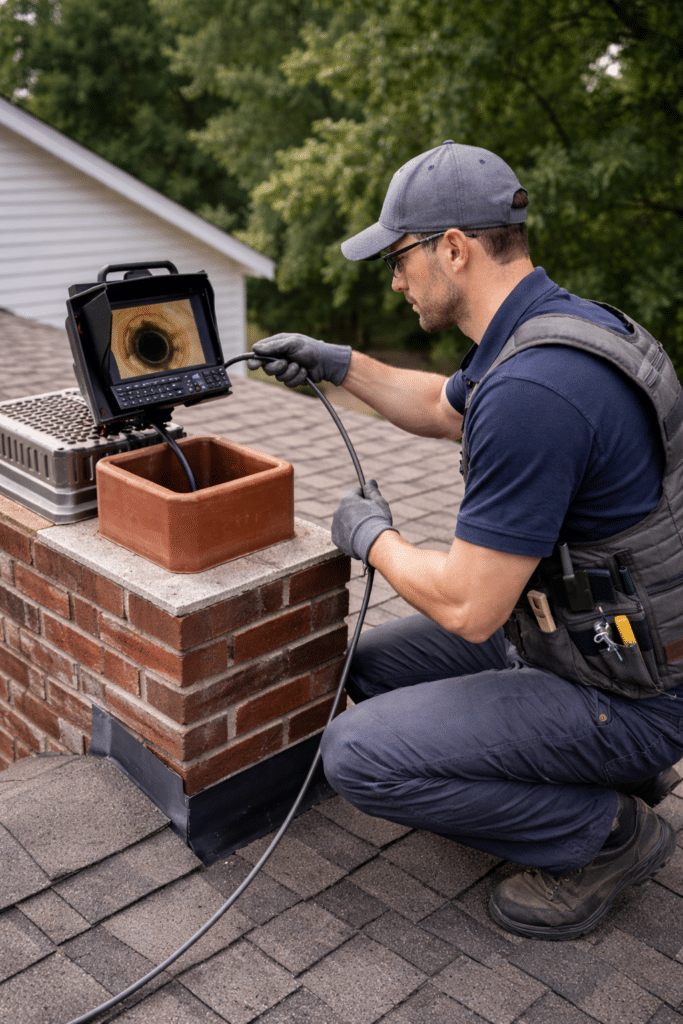
Let’s start with the most obvious one. If you genuinely can’t remember the last time a professional looked at your chimney, that right there is your sign. The National Fire Protection Association recommends an annual inspection regardless of how often you use the fireplace. Not every other year. Not “when something seems off.” Every year.
If it’s been two or three seasons, or you moved into the house and have no idea what the previous owners did, book it now. You don’t know what you don’t know, and that’s exactly the kind of situation where inspections earn their cost.
2. There’s a Smell Coming From the Fireplace
A fireplace that hasn’t been used in months sometimes has a faint, dusty smell when you open the damper. That’s normal. What’s not normal is a strong, smoky, or almost barbecue-like odor coming from the firebox when you haven’t lit anything.
That smell is usually creosote, the tar-like byproduct of burning wood that builds up on the inside of the flue. When it gets thick enough, it starts to smell, especially on humid days or when the weather changes. Heavy creosote buildup is also a fire hazard. If your living room smells like an old campfire for no obvious reason, get an inspection before you light a single log this winter.
3. You Notice White Staining on the Outside Bricks
This white, chalky residue is called efflorescence, and it’s caused by moisture moving through the masonry. On its own, it looks minor, just a cosmetic thing. But it’s actually a signal that water is getting into the brick and mortar, which causes slow but serious damage over time. Freeze-thaw cycles in winter make it worse fast.
If you’re seeing white streaks or patches on the outside of your chimney, there’s likely a moisture problem that needs to be addressed before it becomes a structural one.
4. The Mortar or Bricks Look Cracked or Crumbling
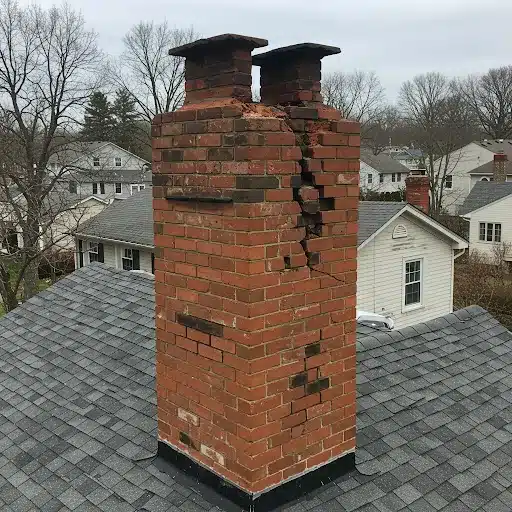
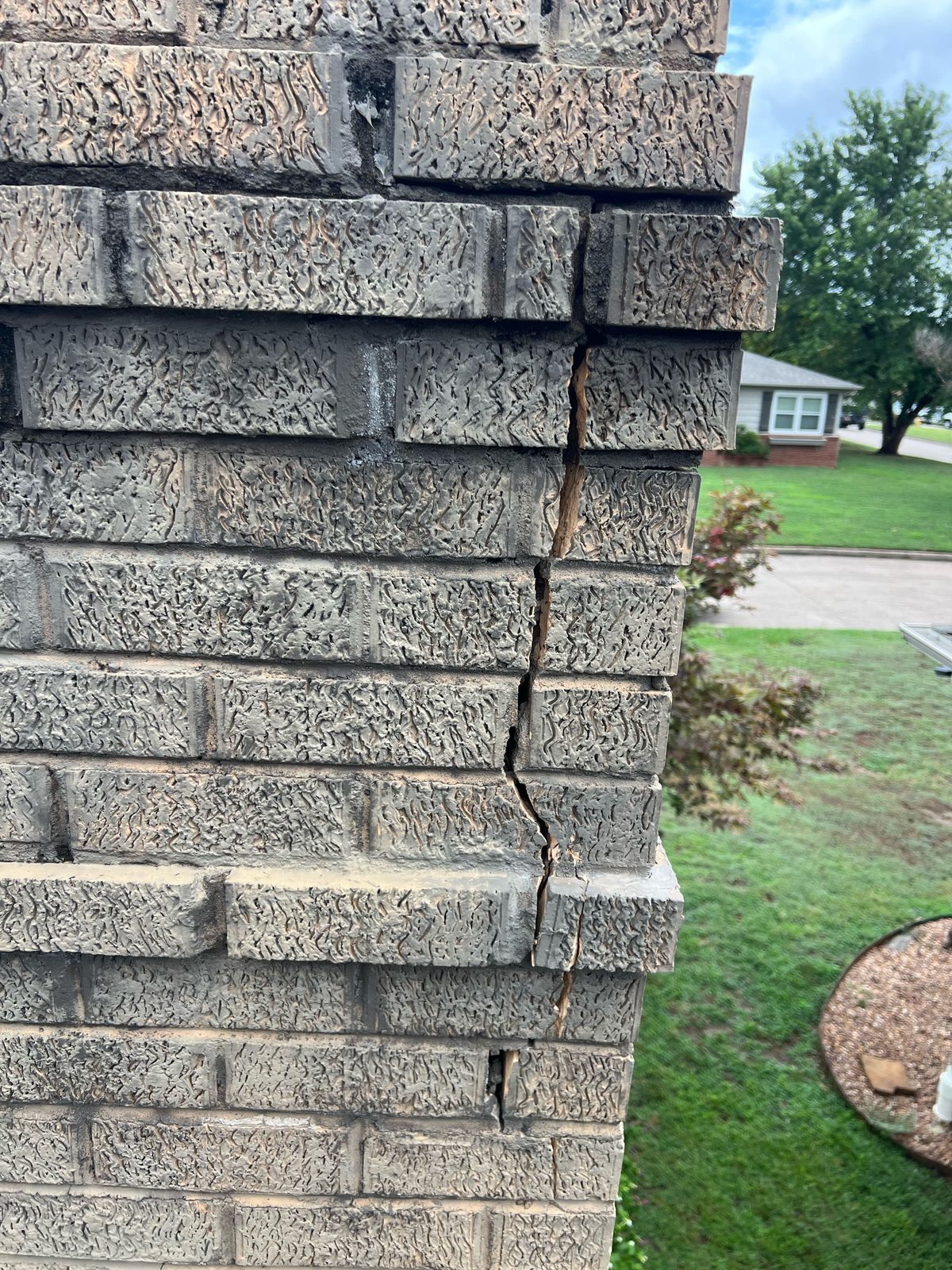
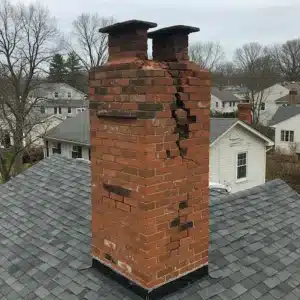
Go outside on a clear day and actually look at your chimney. Not a glance, a real look. Are there bricks that seem to be shifting or leaning slightly? Is the mortar between them cracking, flaking, or missing in spots?
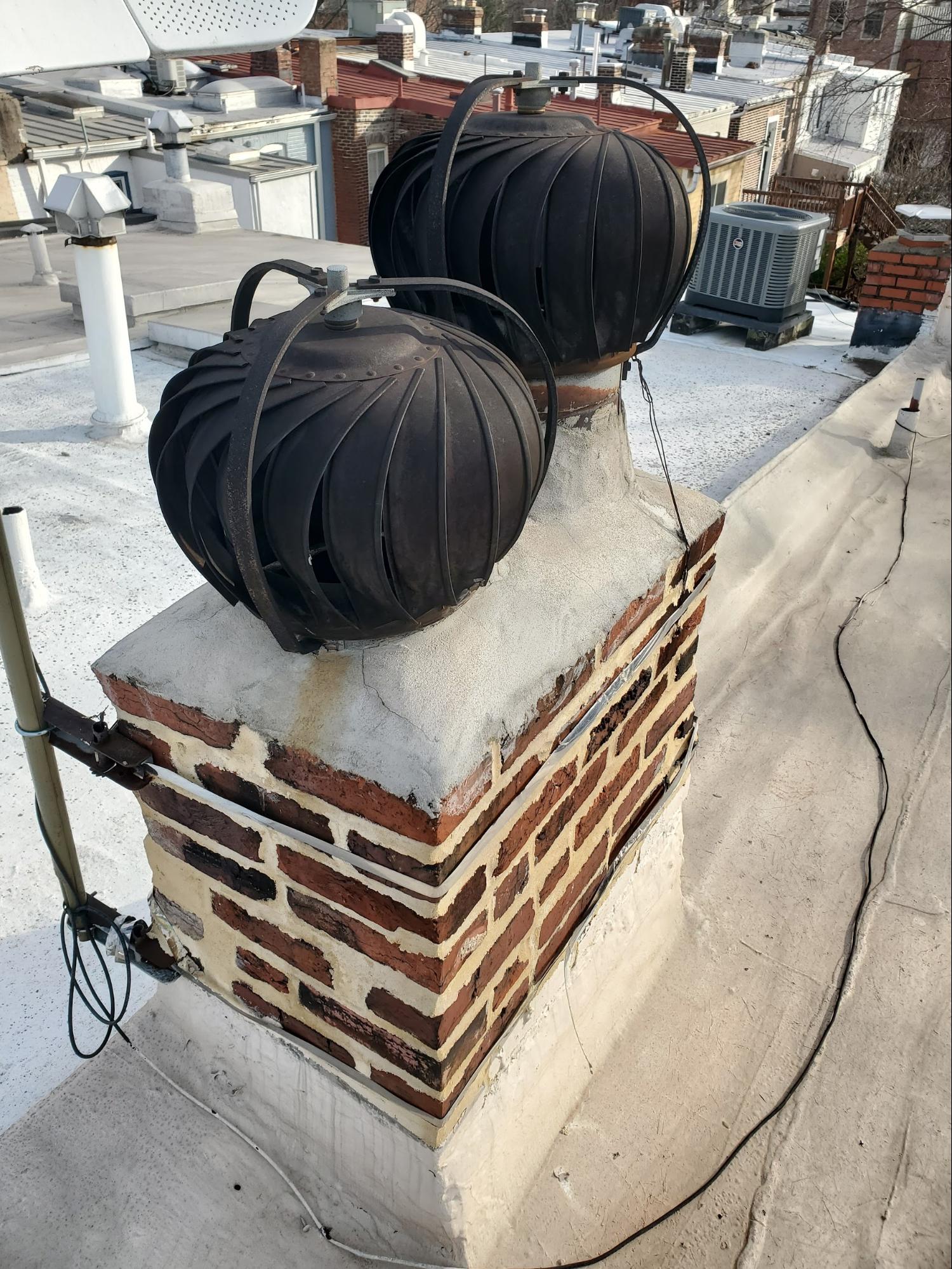
Mortar deteriorates naturally over the years from heat, cold, and moisture. Small cracks are patchable. But if you’re seeing widespread crumbling or bricks that look like they’ve been through too many winters already, that’s not just cosmetic. It’s a safety issue. A damaged chimney structure can allow carbon monoxide or smoke to seep into your home instead of venting properly outside
5. Smoke Fills the Room When You Use the Fireplace
This one’s hard to ignore. If you light a fire and smoke starts drifting into the room instead of going up the chimney, something is blocking the airflow. It could be a closed or stuck damper, a bird nest, a buildup of debris, or even a collapsed section of flue liner.
Any of these things make the fireplace unsafe to use. Don’t keep lighting fires hoping it works itself out. Get someone in there to find out what’s going on.

6. You Hear Animals or Rustling Sounds Inside the Chimney
Birds, especially chimney swifts, and small animals like squirrels love chimneys. They’re warm, protected, and feel safe. If you hear chirping, scratching, or fluttering coming from inside the chimney, there’s likely a nest in there. Using the fireplace with a nest inside is dangerous and, depending on the species, potentially illegal.
An inspection will confirm what’s in there and what needs to be done before winter use.

Don’t Wait for Something to Go Wrong
The theme running through all of these signs is the same: chimneys don’t fail dramatically or all at once. They give you quiet warnings, a smell here, a stain there, a little smoke that seems manageable. Those quiet warnings are worth listening to.
A chimney inspection before winter isn’t an expense. It’s the thing that makes sure your favorite cold-weather ritual is actually safe to enjoy.