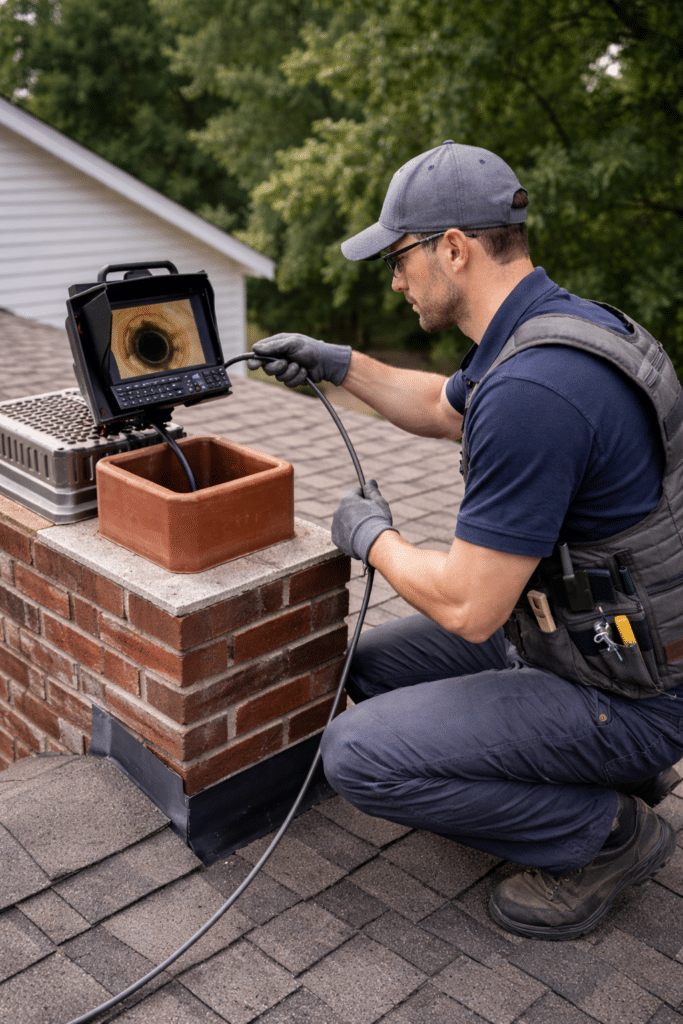
Most homeowners don’t think much about their chimney until something feels off. The tricky part is that chimney problems don’t always announce themselves loudly. Sometimes it’s a small smell, a slight change in how your fireplace performs, or a mark on the wall that seems easy to ignore. Knowing what to look for can help you catch issues early, before they turn into something more expensive or dangerous. Here are seven signs that suggest it’s time to call a professional.
A Strong, Musty Odor Coming From the Fireplace
If you notice an unpleasant smell coming from your fireplace, especially on humid days or when the air conditioning is running, that’s often a sign of creosote buildup inside the flue. Creosote has a distinct sour, smoky smell that tends to get stronger as it accumulates. This odor is one of the clearest signs that your chimney is overdue for a cleaning.
Dark Staining or Soot Around the Fireplace Opening
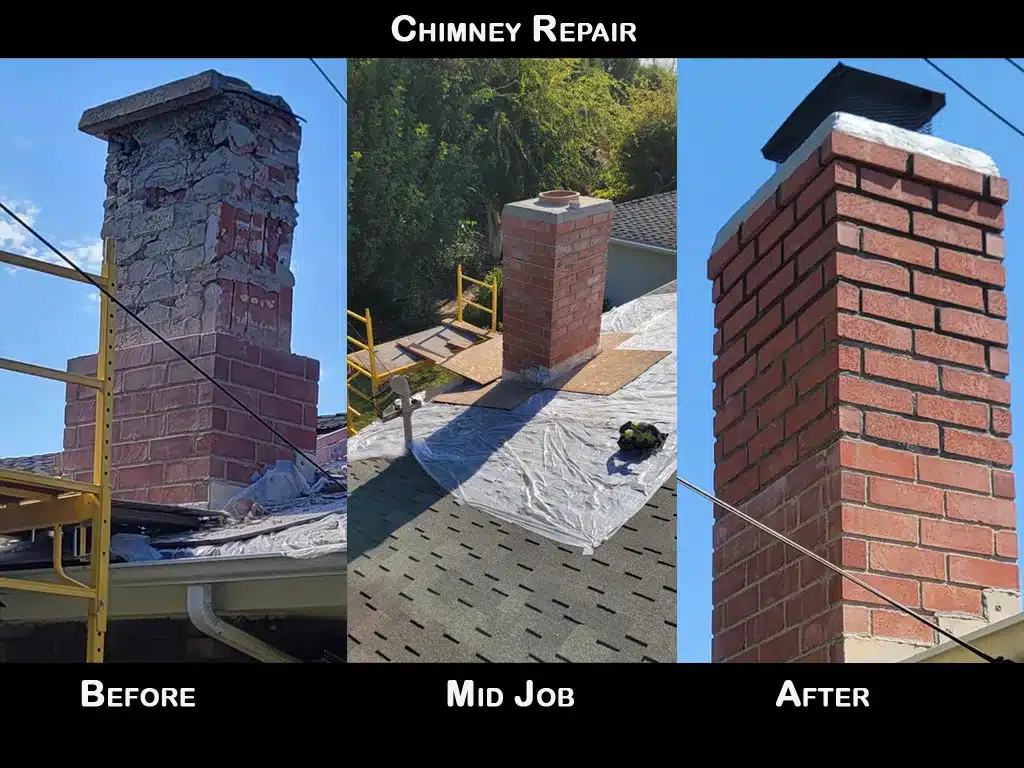
Black or dark staining around the edges of your fireplace opening is usually a sign that smoke isn’t venting properly. This can point to a blockage, poor airflow, or a damper that isn’t functioning the way it should. If you’re noticing more soot than usual collecting on the mantel or nearby walls, it’s worth having a professional take a closer look.
Difficulty Getting a Fire to Draft Properly
If your fires seem harder to start, smokier than normal, or the smoke seems to linger in the room instead of drawing up and out through the chimney, that’s a strong indicator something isn’t working correctly. Poor draft can be caused by creosote buildup, a blockage from debris or an animal nest, or structural damage inside the flue. Whatever the cause, it’s not something to ignore, since improper venting can allow smoke and gases to build up indoors.
Visible Cracks in the Chimney Crown or Bricks
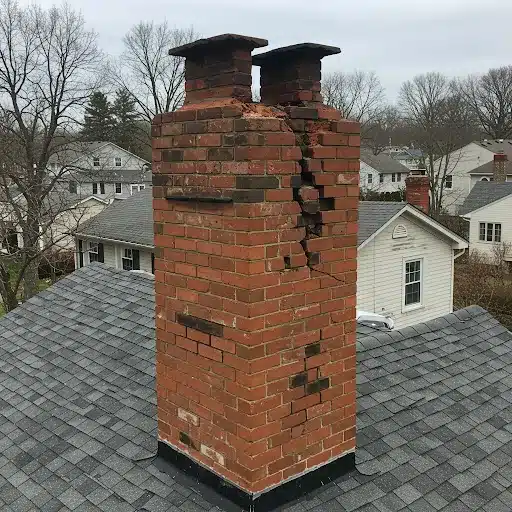
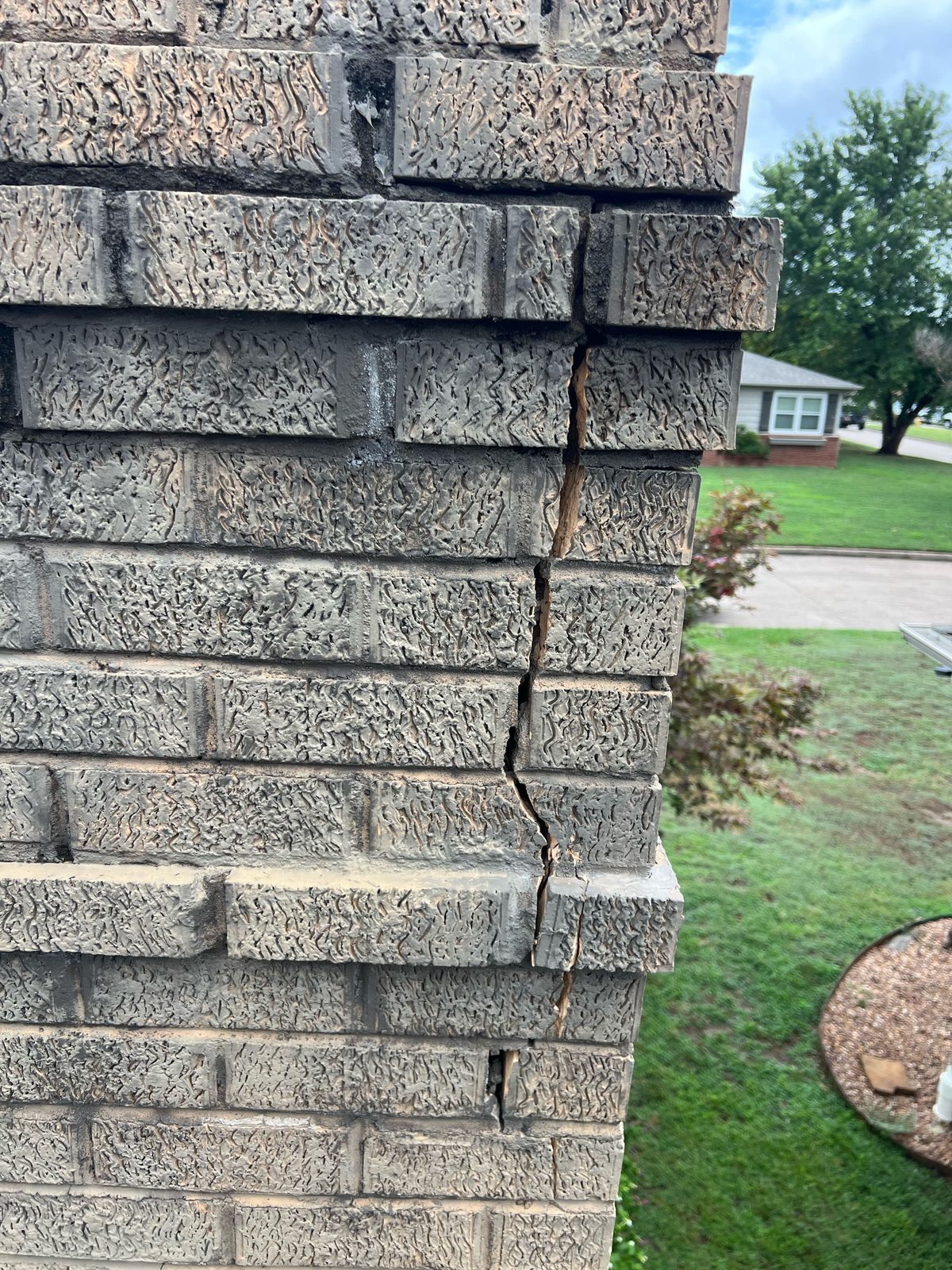
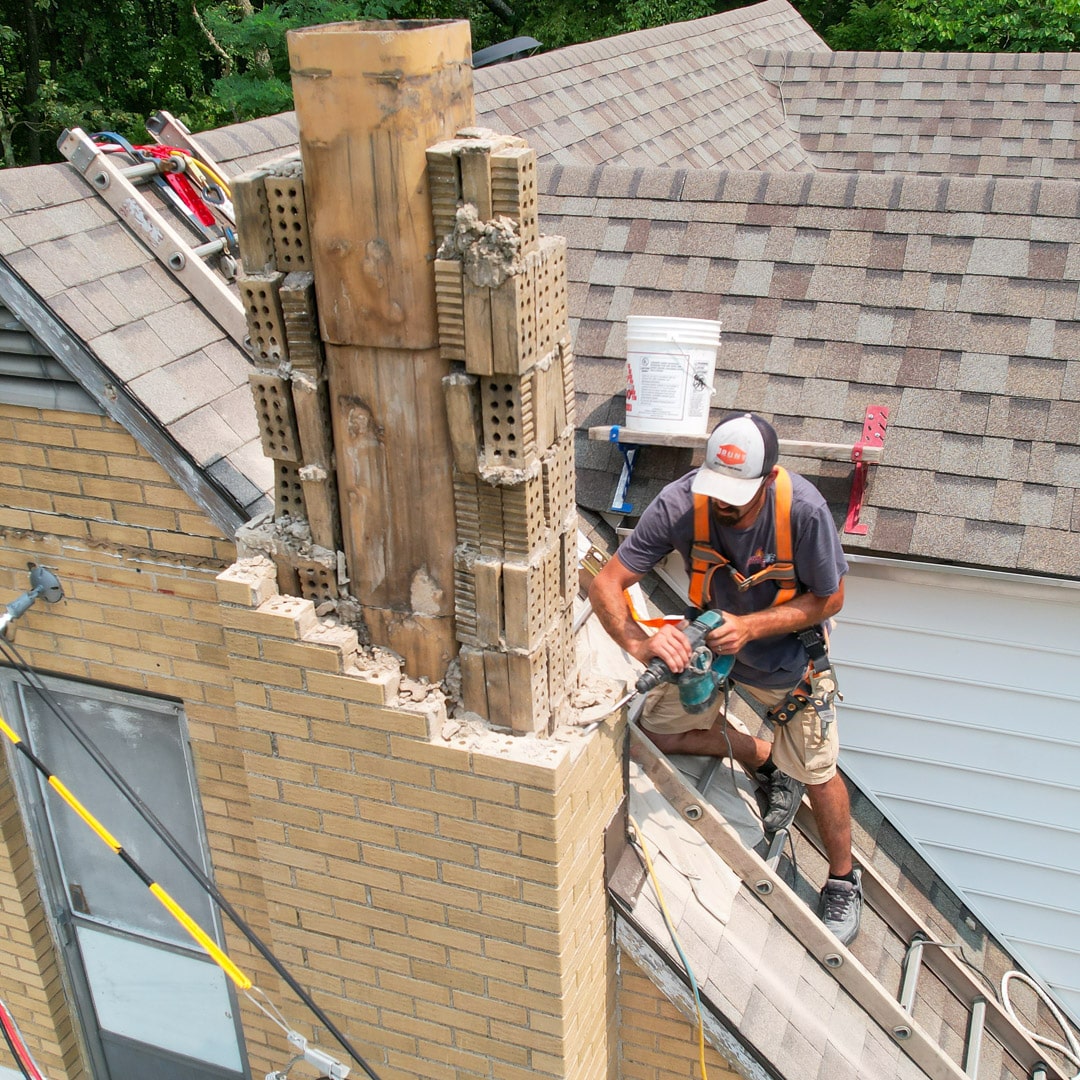
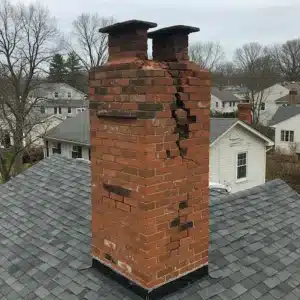
Take a look at your chimney from the outside every so often, especially after a rough winter or a major storm. Cracks in the crown, the concrete cap at the top, or cracks running through the brickwork itself are signs that water may be finding its way into the structure. These cracks tend to get worse over time as moisture seeps in and expands during freeze thaw cycles, so catching them early can prevent much more serious damage down the road.
White Staining on the Exterior Brick
That chalky white residue sometimes seen on brick chimneys is called efflorescence, and it’s a clear sign that water is getting into the masonry. While the staining itself isn’t dangerous, it points to an underlying moisture problem that needs to be addressed before it leads to spalling, crumbling mortar, or interior water damage.
Small Pieces of Debris or Tile Landing in the Fireplace
If you’re finding small chunks of masonry, flakes of tile, or bits of debris inside your firebox after using the fireplace, that’s often a sign that your flue liner is deteriorating. A damaged liner is a serious issue because it’s meant to protect the surrounding structure from heat and byproducts of combustion. Finding debris like this is a strong signal that a professional inspection is needed right away.
Rusted Damper, Firebox, or Chimney Cap
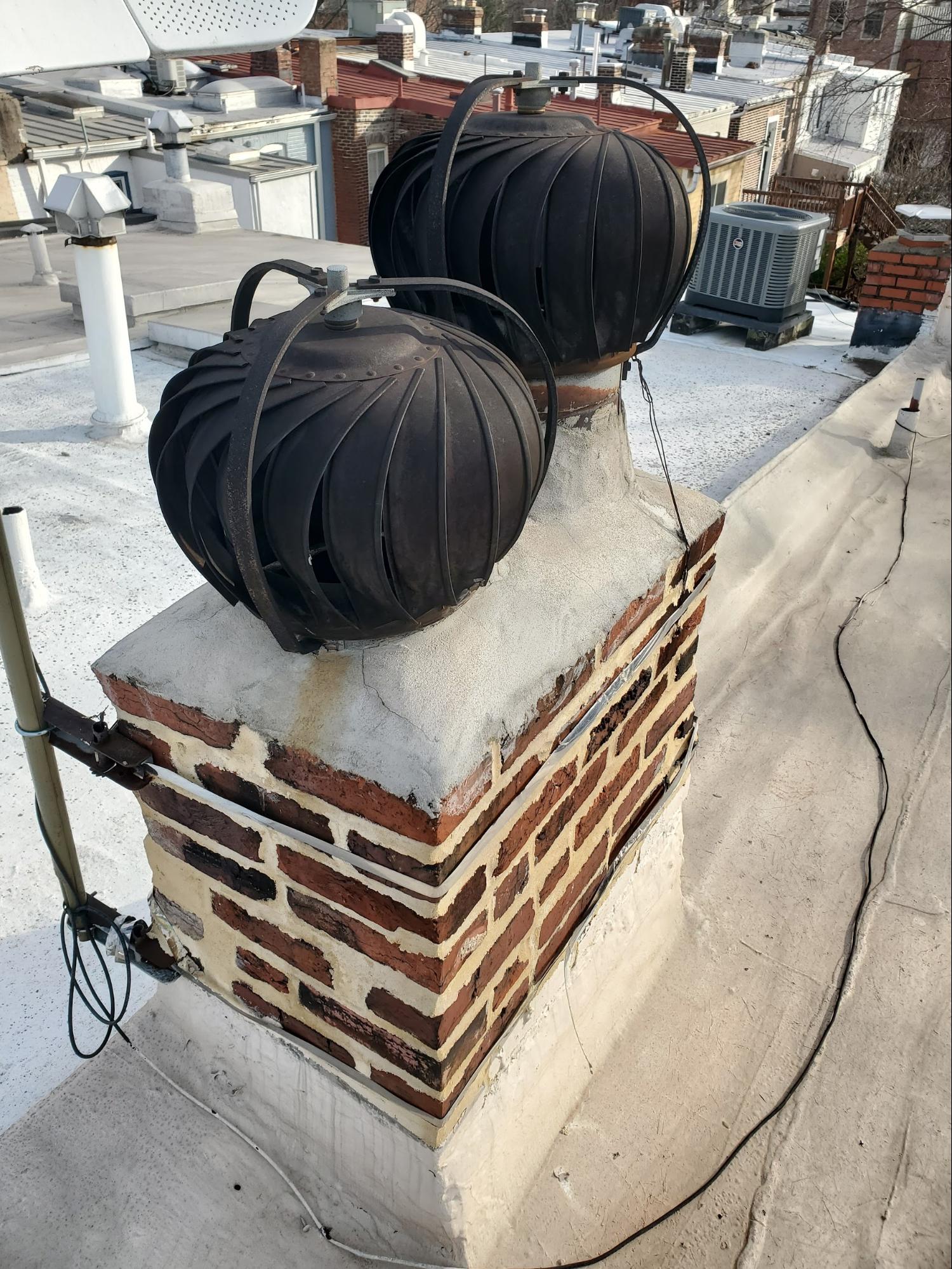
Rust on metal components inside or around your chimney, whether it’s the damper, the firebox, or the cap itself, usually means moisture has been getting in where it shouldn’t. Rust can cause these parts to stick, stop functioning properly, or weaken over time. Since these components play an important role in how your fireplace vents and operates safely, rust is worth addressing as soon as it’s noticed.
Don’t Wait for the Warning Signs to Get Worse
Most of these signs start small and become more obvious over time if left unaddressed. Catching them early usually means a simpler, more affordable fix, while waiting can turn a minor repair into a much bigger project. If any of these signs sound familiar, it’s worth scheduling a professional inspection to get a clear picture of what’s going on and what needs to be done. A little attention now goes a long way toward keeping your chimney safe and your fireplace working the way it should.